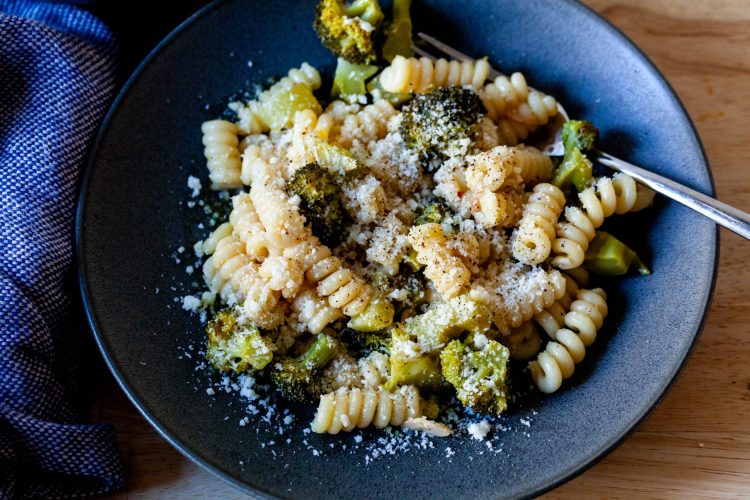
pasta with longer-cooked broccoli
Instructions
I’ve been working up the courage to tell you about this dish for a few years. Why courage, you might ask? What’s courageous about the timeless combination of broccoli and pasta, Deb? It’s the cooking time. This broccoli is not al dente. It does not “retain a crunch,” “still have some bite to it,” or keep any of the verdant green hue it entered the pan with. And, even more audacious, it doesn’t wish to. This broccoli applies a philosophy of vegetable cooking times fairly polarized from our current moment, when the minutes we walk vegetables by the fire have plunged so far that some of us even advocate for eatingcauliflower,asparagus, and evenbroccoliraw. [Or, in a twist on the words of a steak cooking chart I once saw on the wall of a restaurant in Texas: A good farmer could still save the vegetable.]
But there is a time and place for all vegetable cookery, and this is the one that really made me fall in love with what happens when broccoli is cooked until it begins to melt. What is key is that this is not the bland, soggy, boiled to death broccoli nightmare of someone’s childhood cafeteria or dinner at grandma’s house. [Justice for grandmothers, always, however, for feeding us ingrates anyway.] This is more silky, closer to braised, and hasan elusive vegetable sweetness,a nod of vegetable confit, that only comes with the luxury of the unrushed.
Which is funny because this is all in the service of a pasta-and-broccoli actually perfect for weeknights — a one-pan meal. It takes a page from an Apulian dish usually made with orecchiette and broccoli rabe (orecchiette con cime di rapa). The simplest way to make it is just to boil the vegetable and pasta together, and dress it at the end with olive oil, garlic, cheese, and seasonings as we do in this pasta with garlicky broccoli rabe. But this diverges in two ways. First, less divisive regular (Calabrese) broccoli is swapped in for broccoli rabe. The broccoli is first sauteed in a hearty glug of olive oil and a lot of aromatics — garlic, lemon zest, pepper, and anchovies, which are wonderful here even if you think you don’t like them. This step ensures that the final vegetable tastes not just boiled, but complex and fragrant when we next add both the dried pasta and water and finish cooking them together. I can’t wait for you to find out how good it is.
Ingredients
1 pound broccoli5 tablespoons olive oil, plus more to finish5 thinly sliced cloves of garlic2 anchovies, roughly chopped (optional, see note)Zest and juice from 1/2 a lemon1/4 teaspoon red pepper flakes, or to taste2 teaspoons kosher saltGlug of white wine (optional)3 cups room temperature water8 ounces dried pasta such as fusilli corti or gemelliGrated parmesan or pecorino romano to finish (see note)
Cooking Tips
1 pound broccoli5 tablespoons olive oil, plus more to finish5 thinly sliced cloves of garlic2 anchovies, roughly chopped (optional, see note)Zest and juice from 1/2 a lemon1/4 teaspoon red pepper flakes, or to taste2 teaspoons kosher saltGlug of white wine (optional)3 cups room temperature water8 ounces dried pasta such as fusilli corti or gemelliGrated parmesan or pecorino romano to finish (see note)